

About Us

DigitAll Empowerment: Towards the development of a seamless network of female

Background and rationale:

When women and girls have equal rights and access to resources and services and contributions to social and economic activities, societies thrive. Hence, women’s exclusion from resources and facilities can significantly affect economic development. For instance, a lack of access to and use of the internet by women and girls can lead to a loss of USD15 trillion in low- and middle-income countries by the year 2025.

Despite efforts by the Egyptian government and various development organisations, significant hurdles to women’s equality remain, particularly in terms of gender gaps, often underpinned by negative stereotyping, workplace discrimination, and patriarchal power relationships. Egypt is ranked 146th out of 156 countries in women’s economic participation and opportunity. Only 20% of Egypt’s working-age women are participating in the economy, compared to 75% of men, and women’s glaringly low participation in the STEM (Science, Technology, Engineering and Mathematics) sector further demonstrates the gravity of the problem. In Egypt, although 50% of the graduates in STEM disciplines are women, their representation in the STEM workforce and their progress in relevant careers are substantially lower than those of their male counterparts.

Gender-based inequality within STEM is also a major concern even in the developed world. In the UK, 61% of those with zero digital skills are women5. Globally, women make up only 29% of the STEM workforce. Negative gender stereotypes and discrimination in education are at the root of many of the challenges women face in undertaking STEM-related degrees and the successful transition to employment in relevant sectors. Effective content, teaching practices, and attitudes, together with suitable and safe learning environments within the higher education sector, can enhance female students’ capacity for and increase their participation and continuous professional development in STEM-related jobs. It is also argued that an ability to use the relevant digital tools can boost women’s participation and leadership in the digital space so that they can become leaders and active agents of change.

Hence, universities have more to do to support female students within STEM disciplines and beyond. It is argued that digital connectivity can bring together isolated and disadvantaged communities and enable them to support the collective growth and wellbeing. In the context of both the UK6 and Egypt7, knowledge and skills to harness digital connectivity, known as digital empowerment, can enable disadvantaged communities, such as women, to thrive. Due to the low number of women in STEM in Egypt, it is necessary that they are connected through digital platforms so that they can grow as a community. However, globally, 259 million more men than women use the internet, thus showcasing the inequal access to digital platforms and the ability to harness the benefits of digital connectivity. Hence, development organisations such as UNDP are advocating for ‘DigitAll’ connectivity and empowerment.

Objectives of the project:

In light of the abovementioned situations, the proposed project aims to foster women’s study, research, and work in STEM by leveraging the strength of digital platforms. Egyptian women’s digital empowerment will be achieved by supporting and enabling female students, academics, and employees in STEM areas to build and enhance their capacity and employability. In so doing, the project aims to achieve the following objectives:

  • To connect, support, and equip Egyptian female university students, academics, and practitioners in STEM through digital platforms. In this way, the project will develop a platform for ‘DigitAll Empowerment’ for Egyptian women involved in STEM-related study, research, employment, and entrepreneurship.
  • To promote women’s participation in STEM and work toward overcoming gender stereotyping by sharing women’s success stories in STEM and incorporating the same within higher education curricula in the UK and Egypt
  • To build the capacity of female university students, academics, and practitioners in STEM by enhancing their employability skills and offering opportunities for continuous professional development

This project builds on an existing partnership supported by the British Council Research Environment Link fund, which enabled the partnering academics to study Egyptian single mother’ inclusive digital finance. Drawing on the experience from the previous study and leveraging on the partnership with wider UK-based and Egyptian academics, practitioners, and policy makers, the project will facilitate dialogue and broker collaboration, which will make significant contributions to building a supportive atmosphere for women and encourage their wider participation in STEM-related academic studies, research, and industry careers.

DigitAll Team

Dr Lefteris Kretsos

BSc, MA, PhD, FHEA
Senior Lecturer in Business and Management Brunel Business School College of Business, Arts and Social Sciences Brunel University of London, England, UK
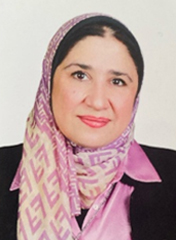
Prof. Rasha Abd El Aziz

BSc, MSc, PhD, SFHEA
Professor in Information Systems and Digital Business Head, Business Information Systems Department College of Management and Technology Arab Academy for Science, Technology and Maritime Transport

Prof. Ahmed Abdelaziz

BSc, MSc, PhD
Professor of Photonic devices and optical communication
Head of Electronics and Communications Engineering Department
College of Engineering and Technology
Arab Academy for Science, Technology and Maritime Transport
wpChatIcon
wpChatIcon